

BURNING MAN
http://canada.theoildrum.com/node/3008
Posted by Stoneleigh on September 24, 2007 - 8:00pm in The Oil Drum: Canada
Topic: Alternative energy
Tags: distillation, leave-no-trace, radical self-reliance, renewable energy, rocket stoves, solar, steam, sustainability, wind (list all tags)


RECENTLY, I spent eight days in the Nevada desert with 47,000-some-odd other folks at the utterly unique annual event called Burning Man. This was my third time there, and it was more than a third larger, and quite a bit more taxing, than I remembered from my last attendance in 2000. For those who haven't heard of Burning Man, it's . . . well, it's hard to describe. In fact there are probably as many descriptions as there are attendees.
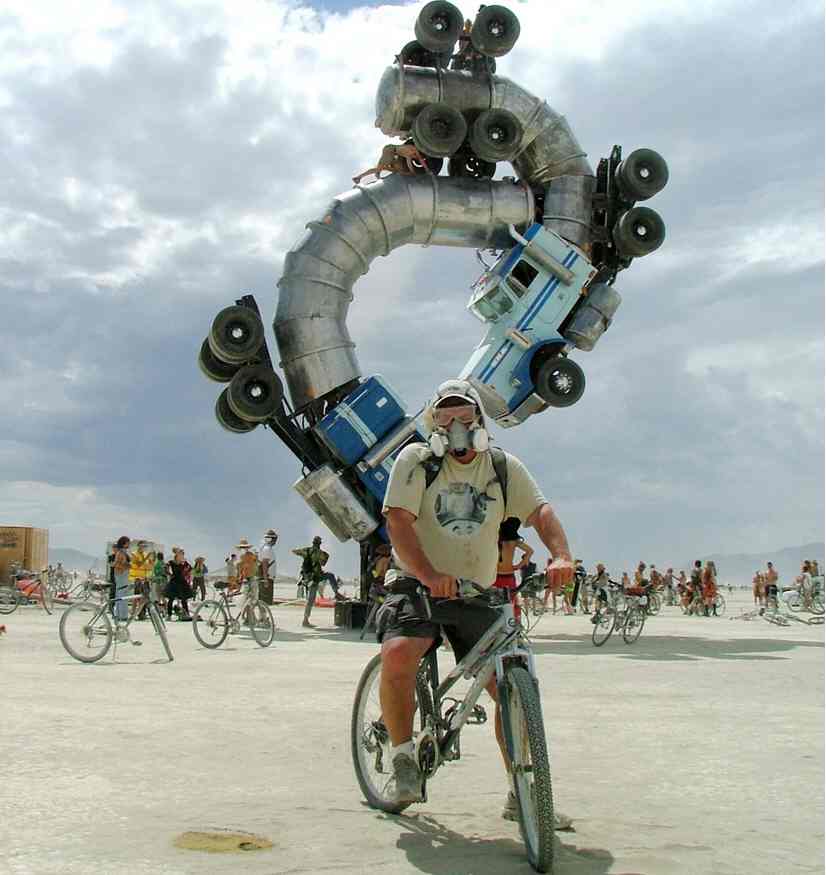 The author, wearing Burning Man basics in front of an art sculpture made from two oil tankers that you can climb through
A five-mile-wide temporary town called Black Rock City is built over a period of several months on an ancient seabed, a flat expanse of alkali dust between mountain ranges. Although the event is funded by an LLC that sponsors it every year, much of the labor that goes into creating it is voluntary.
To this city come many thousands of attendees: some just looking to party, some to practice "radical self-expression," some to create amazing and enormous art pieces . . . but all to experience "radical self-reliance."
Because the only thing provided by the sponsors is porta-potty service. Everything else you need--water, food, shelter, energy, transportation, everything--is up to you.
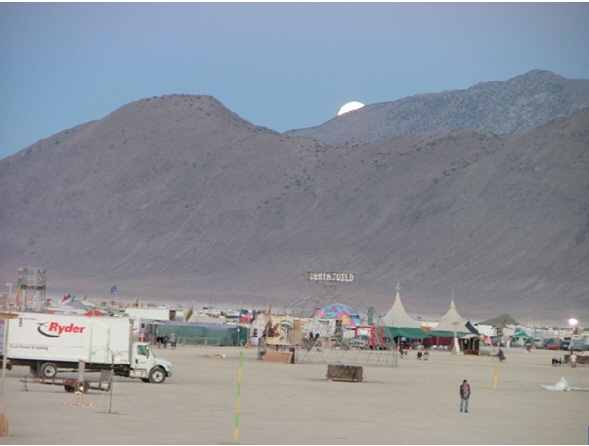 Moonrise over Black Rock City on the opening day
And that is no small feat in this place, where temperatures run well over 100 degrees nearly every day, where white-out dust storms with wind speeds over 50 mph can persist for hours at a time and destroy your shelters, and where pelting rains, even hail, can appear suddenly to turn the whole place into a deep mud pit.
That's why one's de rigeur Burning Man gear must include such elements as a protective hat, fully enclosed goggles and an air respirator.
So why, might you ask, would anyone do this, let alone buy a $350 ticket for the privilege, not to mention the expenses of travel, gear and provisions? ($1,500 is a typical total per person, but those who go in style with a big RV might lay down $10,000, and some theme campers and artists spend well in excess of that!)
For me, the answer is simple: because there's nothing else like it, anywhere, nor could there be.
If you Google around and see what folks have written about the event in their blogs, and check out the videos they post to YouTube, you'll find a wide array of opinions and politics, including strident complaints from veterans that the spirit of the event has strayed far from its original roots as a small anarchic free-for-all since it began some two decades ago.
There is also a good bit of criticism surrounding this year's art theme, "Green Man." And how could there not be, when you have over 47,000 people traveling hundreds (or thousands) of miles to participate in an event that prominently features burning stuff for pure entertainment?
For example, the "Crude Awakening" event, which featured a 100-ft. tall wooden sculpture of an oil derrick spewing out an approximately 1000-ft tall fireball--big enough to be seen from space--complete with fireworks show, while undoubtedly a thought-provoking bit of art about oil, could hardly be called "green." According to the artists, the detonation of this piece used 2.4 gigawatts of energy, enough to "power the entire [San Francisco] Bay Area for one minute."
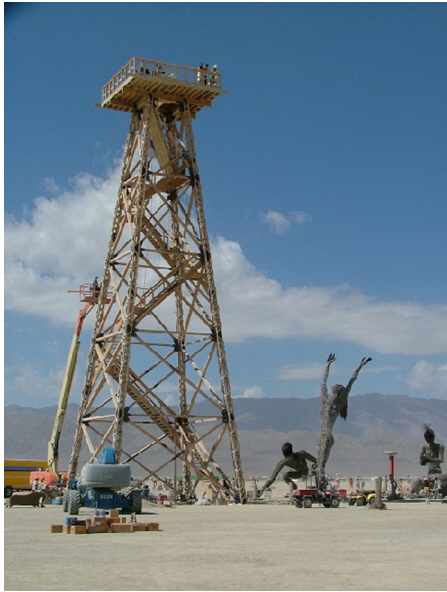 "Crude Awakening" before it burned, with oversized human sculptures in supplication
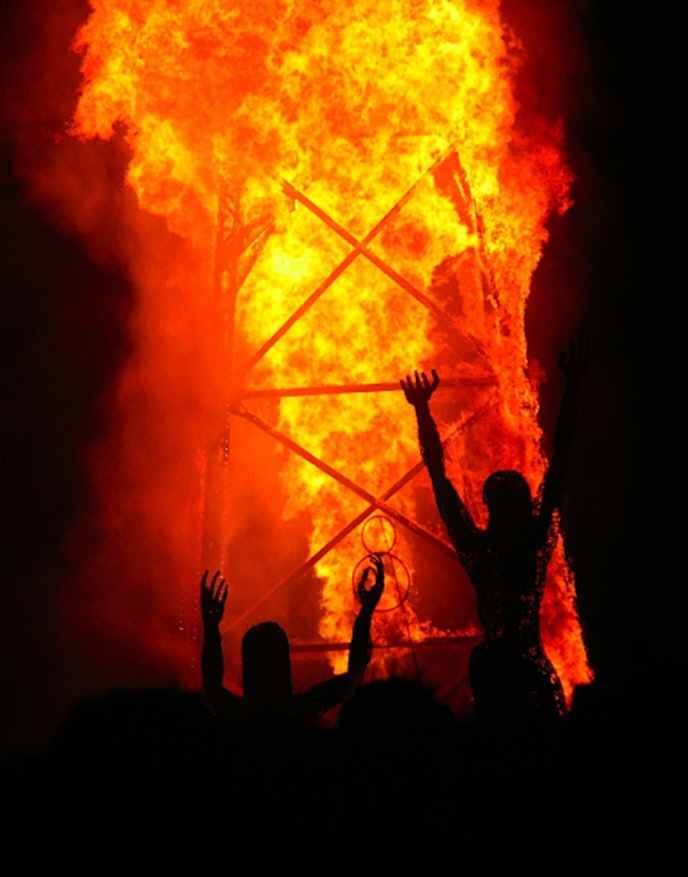 "Crude Awakening" as it burned. Photo by Andy Gadiel
Not to mention the burning of the Man himself (a 50-foot tall wooden effigy) --again, complete with fireworks display:
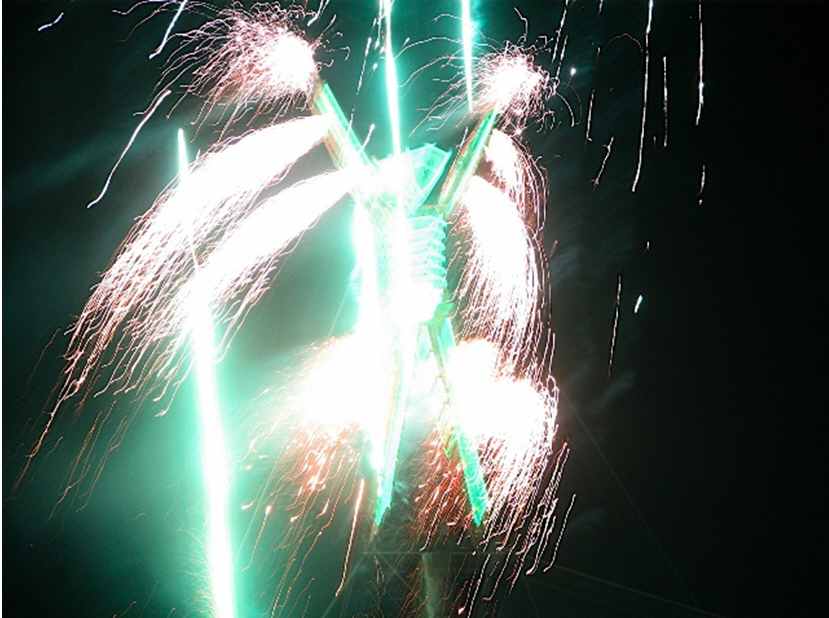 The Man starting to burn. Photo by Andy Gadiel
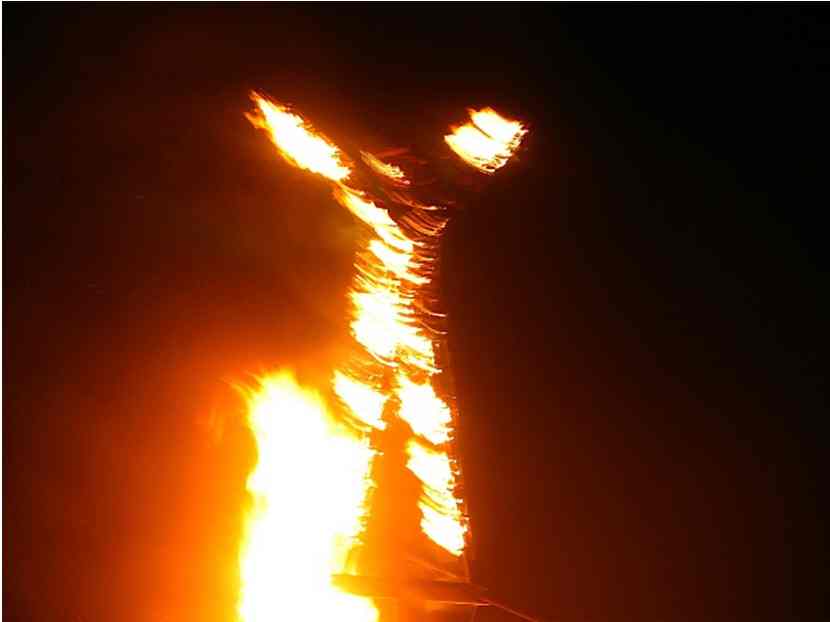 The Man in full burn. Photo by Andy Gadiel
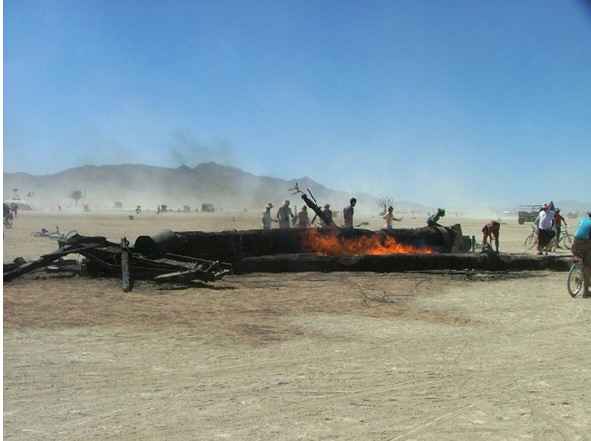 The remnants of the Man, still burning the following day
 But amid all the wanton excess and free-for-all partying that most easily captures one's attention at Burning Man, and despite the many valid criticisms and ironies of the "Green Man" theme, I found some true value in it for those of us who are concerned about the future of energy and humanity's ability to adapt to a changing world.
In fact, I think it's the most optimistic thing I've ever seen or done on that score.
I found steam-powered cars . . . small efficient "rocket stoves." . . . solar-powered everythings . . . a multitude of small wind turbines . . . educational displays about energy and sustainability . . . a fully functioning "gift economy" where only coffee and ice may be purchased with money . . . where tens of thousands of people make instant community, rely upon themselves for all their basic needs, and "leave no trace," all while having a lot of fun doing it.
Energy Inspirations from Burning Man
While for many Burning Man is just a big bacchanal and an exercise in artistic "radical self expression," it's also exactly what you make it. If a party is what you're looking for, you'll find it.
But I was looking for some inspiration for those of us who are concerned about the future of energy, and humanity's ability to adapt to a changing world. And I found that too.
In this article, I'll mostly let the photos do the talking. Here is a small sampling of the ones I took.
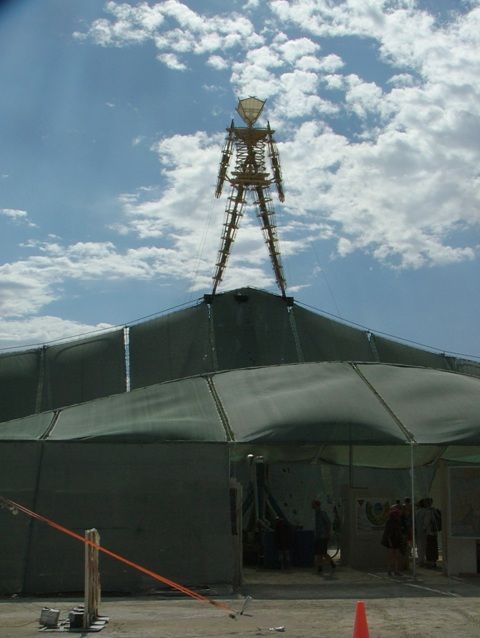
Below the Man, there was a pavilion featuring informational displays, kiosks, games, moderated discussions, renewable energy machines...a host of useful and educational resources where one could learn about energy, the energy aspects of the event, and options for the future.
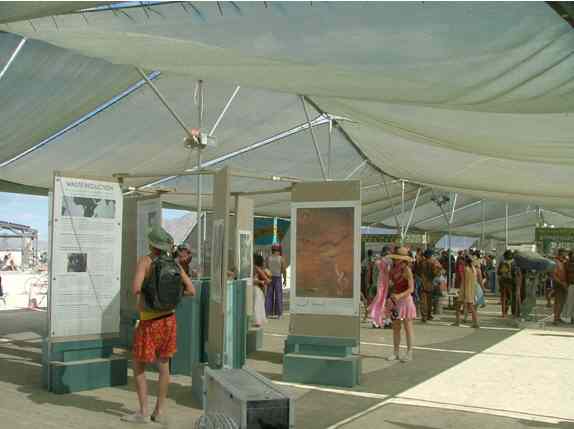
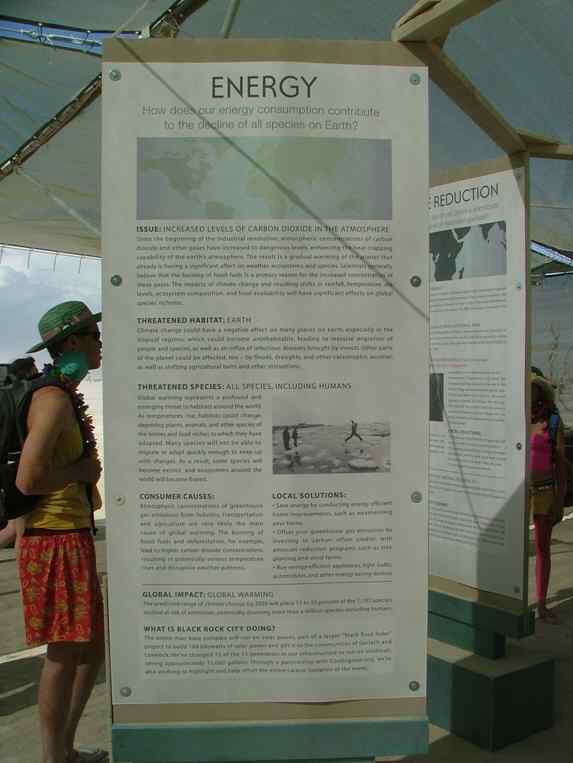
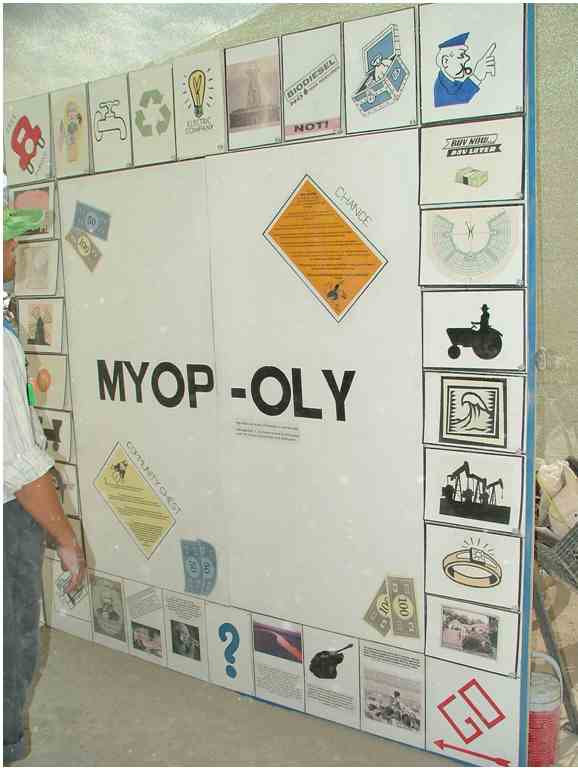
Here's one display that I thought was clever. Each square of the "Myop-oly" game was a window you could open to see a few paragraphs and photos about each subject, with a general focus on our myopic oil-based approach to energy policy:
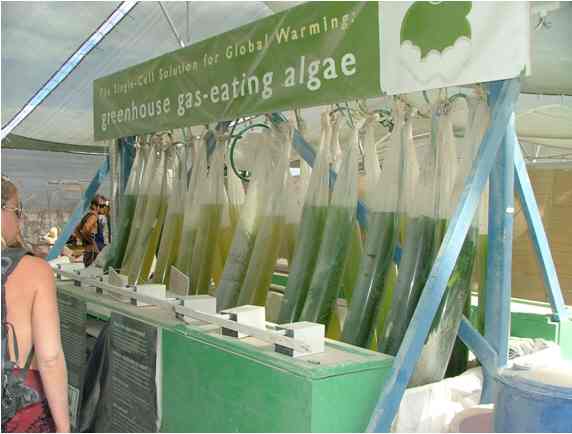
Near to that display, there was a working algae carbon-sequestration unit, which was fed CO2 from the exhaust of a generator:
There were a few displays designed to make you think about your own energy footprint:

On a different note, one of the key elements of the Burning Man ethos is "Leave No Trace." Every single tiny little bit of anything that isn't playa dust or clean water is MOOP (Matter Out Of Place) and must be tracked down and captured, even MOOP as small as stray fibers of clothing and sequins. Consequently, there is a trash fence strung along the outside boundary of the event, some eight miles long (if memory serves).
Only by leaving no trace can an event like Burning Man continue on these public lands (managed by the Bureau of Land Management). So every camp is exhorted to do a MOOP sweep over every single inch of their campsite before leaving. Everything that the campers don't catch, somebody else will have to clean up later when Black Rock City is finally and completely removed, leaving only the playa.
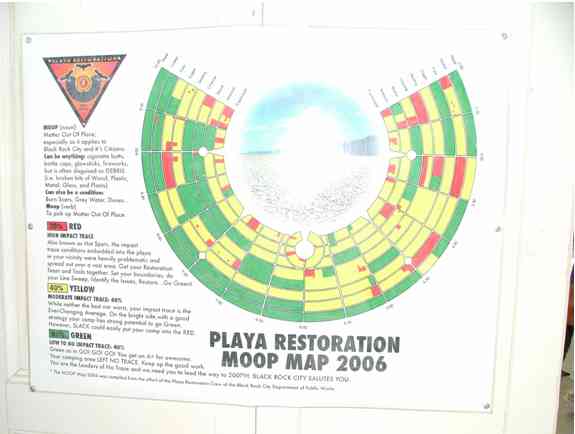
This map showed the good (green) the bad (yellow) and the ugly (red) sectors from the previous year.
There was even a little "Eco-confessional" booth where you could step in and confess your ecological crimes to a person on the other side of the veil.
This year, the Man was powered in part by a solar PV system:
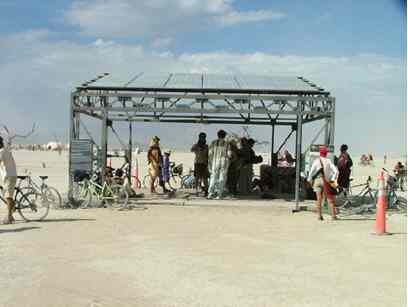
But for a longer-term impact, Burning Man also sponsored the design and installation of a 120 kW solar array in Gerlach, Nevada and a 60 kW solar array in Lovelock, Nevada, which will remain year-round as a donation to the nearby communities.
Among the more interesting installations in the pavilion under the Man was a unique little wind turbine, just 200 lbs and 6.5 feet tall, on a pedestal which was designed for mounting to the parapet of a flat roof, so that it wouldn't require any roof penetrations. This cute little bugger purports to start up with only a 7 mph wind (12 mph is more the usual requirement) and claims to produce 55 kWh/month (but they didn't specify how many hours of wind that was based on).

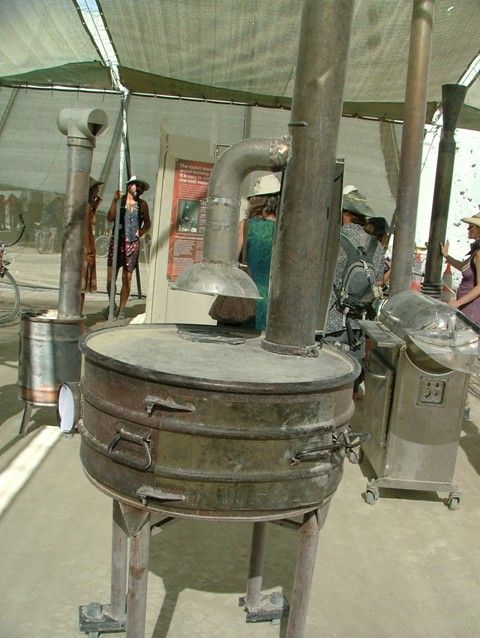
There was another display, featuring several designs of "rocket stoves." These are essentially simple wood-burning stoves, which restrict air flow so that they burn hotter and more efficiently, with fewer emissions. Such stoves can provide space heating, water heating, and a cooking surface all in one. Since they can be made from everyday items and scrap metal, they are particularly useful for third-world applications where wood is the only available fuel but is typically burned in inefficient open pits.
-
.